January 20, 2026 – PRESSADVANTAGE –
SafeAir Certified Mold Inspection Inc. has published a new blog post titled “How Accurate Are Air Mold Tests? A Clear Guide to Testing Reliability.” The company released this article to help homeowners understand what air mold testing can measure, what it cannot confirm on its own, and why inspection quality matters as much as the sample itself. The blog explains how air mold tests work, what can affect results, and what steps help produce more dependable findings.
Homeowners often request air mold testing after they smell a musty odor, see water stains, or feel ongoing allergy symptoms at home. Many people want a clear answer as fast as possible. They want to know if mold is present and if the indoor air may pose a health concern. SafeAir Certified Mold Inspection Inc. wrote this blog to bring clarity to a topic that often causes confusion. The blog explains that air mold tests can help with mold detection, but the test has limits. The blog also explains that testing works best as part of a full evaluation that includes visual checks and moisture detection.
“People search for air mold tests because they want certainty,” said Alex Laldin, Marketing Director at SafeAir Certified Mold Inspection Inc. “Our new blog explains what air testing can do and what it cannot do. We want homeowners to understand how results work so they can make decisions based on clear facts instead of guesses.”
The blog explains that air mold tests measure airborne mold spores in a specific area at a specific time. This measurement can provide a snapshot of what is in the air during the sampling window. The blog notes that air mold testing can support comparisons between indoor and outdoor air. When indoor counts and indoor mold types match outdoor levels, the results can support reassurance in some cases. When indoor levels rise above outdoor levels, the results may suggest an indoor mold source or ongoing moisture.
The blog explains that air mold testing becomes more meaningful when it supports a targeted inspection plan. A trained inspector checks visible surfaces for staining, damp damage, and mold growth. An inspector also looks for building conditions that allow mold to grow. These conditions often include leaks, condensation, and poor ventilation. The blog states that mold growth depends on excess moisture. This point matters because testing without moisture investigation may miss the main cause of mold problems.
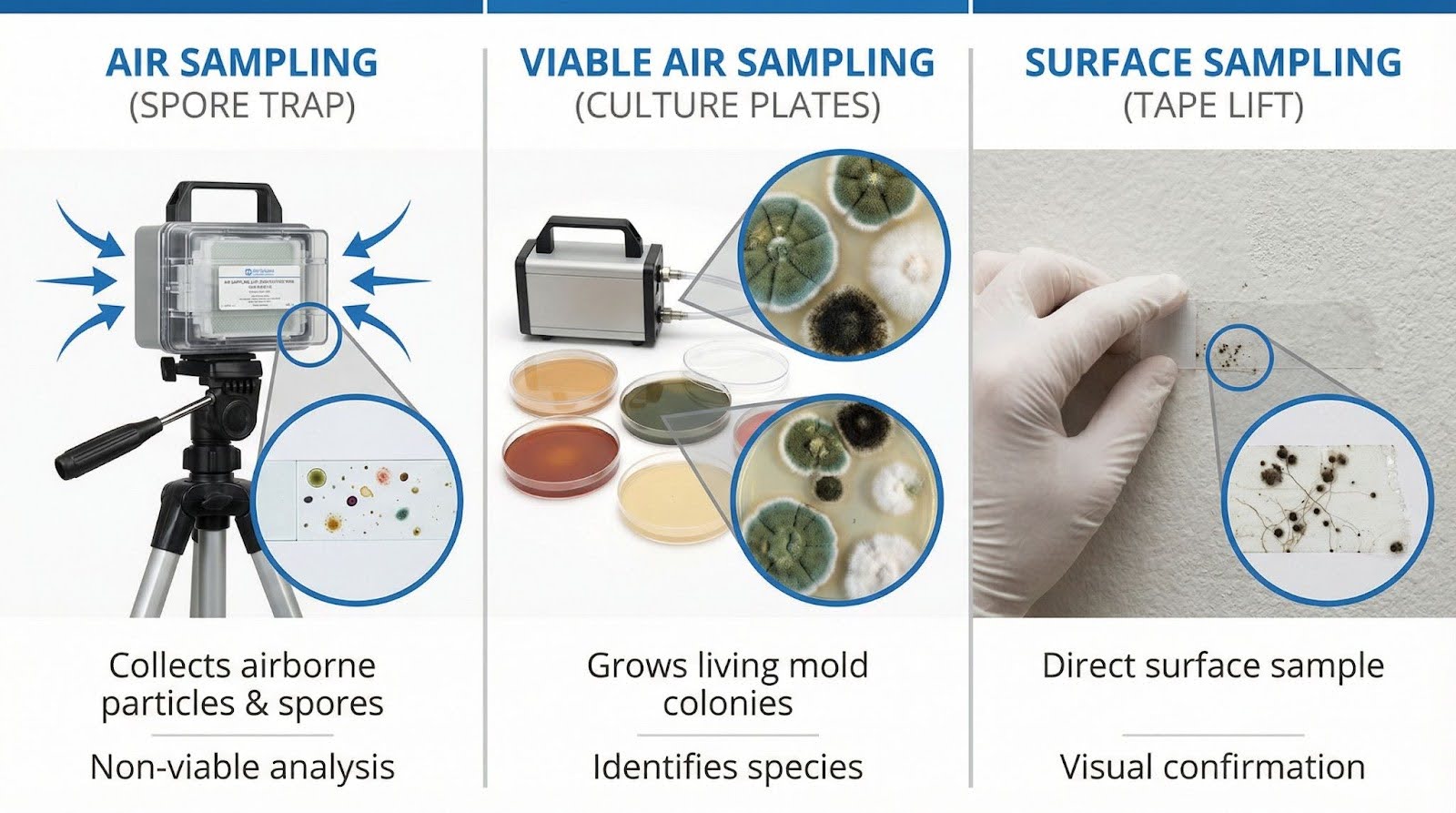
SafeAir Certified Mold Inspection Inc. explains in the blog that mold testing often includes more than one method. Air sampling is one method. Surface sampling is another method. A surface swab or tape lift can confirm what grows on a visible area. Air sampling can help when a homeowner suspects hidden mold and sees no visible growth. The blog explains that the best method depends on the situation. If a homeowner sees visible mold on a wall, sampling may be optional because the mold presence is already confirmed. If a homeowner smells mold but cannot find it, air sampling may help support next steps.
The blog also explains differences between non-viable and viable air sampling. Non-viable sampling captures particles and spores so a lab can identify types and count spores. Viable sampling uses culture media to identify molds that grow in the lab. The article explains that cultures may miss dead spores or molds that do not grow well in testing conditions. The blog describes these methods in plain terms and explains that each method can help in specific cases.
“Homeowners often believe one test will give a final answer,” said Alex Laldin. “Our blog explains that air sampling works best when an inspector uses it for the right reason and in the right location. We focus on context because context shapes reliable results.”
The blog also addresses major limits that can affect test accuracy. The article explains that spore counts can change based on outdoor conditions, indoor airflow, and daily activity. A person can raise indoor spore counts by walking through a room, vacuuming, or opening doors and windows. HVAC airflow can also shift particles from one area to another. The time of day can change air movement and outdoor spore levels. The blog explains that a short air sample does not represent every hour of the day. This is why the blog calls air testing a snapshot instead of a full long-term record.
The blog discusses false positives and false negatives. A false positive can occur when air sampling happens during unusual activity that stirs dust and spores. A false negative can occur when sampling happens when mold spores are not actively moving through the air, even if mold exists in a hidden space. The blog explains that an air test may show low levels even when a musty odor persists. The blog also explains that sampling in the wrong location can produce misleading results.
SafeAir Certified Mold Inspection Inc. also explains in the blog that there are no federal mold standards for indoor residential air. The article states that agencies do not define specific safe airborne mold limits for homes. The blog explains that this lack of a universal threshold makes comparison and interpretation essential. A reliable assessment compares indoor results with outdoor results and considers visible conditions, moisture patterns, and building history. The blog emphasizes that numbers alone do not tell the whole story. A report must match what an inspector sees in the property.
The blog also addresses what “acceptable levels” means in real situations. The goal of mold remediation is not to sterilize indoor air. The goal is to remove active mold growth, correct moisture causes, and return indoor conditions to normal. The blog explains that professional remediation teams often follow industry guidance that considers the size of affected areas and the type of materials involved. The article also explains that post-remediation checks can confirm that cleanup efforts returned the home to a stable condition.
SafeAir Certified Mold Inspection Inc. notes that indoor air quality depends on several factors. Mold spores can mix with dust, outdoor air, and other particles. Poor ventilation can worsen indoor conditions. Chronic dampness can support mold growth and cause ongoing spore release. The blog explains that inspection and moisture checks support a more complete picture of indoor air quality. This approach can help homeowners understand what they are breathing and what changes may help.
The blog also explains the role of hidden mold. Mold can grow behind walls, under flooring, and inside HVAC systems when moisture stays trapped. A home can have hidden mold after a slow plumbing leak, roof damage, or past flooding. The blog explains that air mold tests may detect elevated levels that suggest hidden growth, but air tests cannot always pinpoint the exact source. The blog explains that inspectors often use moisture meters and infrared tools to locate damp materials that may support hidden mold. This method helps target the next step with more accuracy.
“Hidden mold causes worry because homeowners cannot see the problem,” said Alex Laldin. “Our blog explains that air testing alone may not locate the source. We use inspection tools and moisture checks to narrow down the issue and guide the next step with confidence.”
The blog also explains how testing can support a better remediation plan. Air tests can help document conditions before cleanup, and they can help confirm results after cleanup when needed. The article explains that remediation focuses on removing or cleaning contaminated materials, controlling moisture sources, and limiting spore spread during work. The blog also highlights the value of containment and filtration during remediation. These steps reduce the spread of mold particles to clean areas of the home.
SafeAir Certified Mold Inspection Inc. published this article to help homeowners ask the right questions. The company explains that the best question is not only “How accurate are air mold tests?” The best question also includes “Is the assessment complete and does it explain what the results mean?” The blog encourages homeowners to look for a service that combines inspection, moisture diagnostics, and careful interpretation.
SafeAir Certified Mold Inspection Inc. provides professional mold inspection and mold testing services for homeowners, buyers, renters, and property managers who need clear answers about indoor mold and moisture concerns. The company offers air mold testing, surface sampling, moisture detection, and full-scope property inspections designed to identify mold growth, locate hidden moisture sources, and support informed cleanup planning. SafeAir Certified Mold Inspection Inc. helps clients address musty odors, suspected hidden mold, water damage concerns, and indoor air quality questions. The team focuses on science-based methods, clear reporting, and practical guidance for next steps.
###
For more information about SafeAir Certified Mold Inspection Inc, contact the company here:
SafeAir Certified Mold Inspection Inc
Jeremy Shelton
4046950673
inspection@safeairtesting.com
2210 Defoor Hills Rd NW, Atlanta, GA 30318, United States